How to Talk About Your Product Online
You know your product is great. You've put time and thought into making it. You believe in it.
But when you try to explain it online, somehow it doesn't land. People don't get it. They don't seem excited. They scroll past.
The problem isn't your product. It's how you're talking about it.
Let's fix that.
Start With the Problem, Not the Product
Most people make this mistake: they start by describing what their product is.
"It's a gel-filled beanie with temperature regulation technology and..."
Stop. Nobody cares yet.
Start with the problem your customer has.
"Your kid hates wearing helmets because they're uncomfortable and hot..."
NOW you have attention. Because you're talking about THEIR problem, not your thing.
Once they're nodding along about the problem, THEN introduce your solution.
Speak Your Customer's Language
You might call your product a "thermal regulation headwear system."
Your customer calls it "a hat that keeps my head cool."
Use their words, not yours. Forget technical terms. Forget trying to sound smart.
Talk like your customer talks.
The Formula That Works
Here's a simple structure for talking about your product:
State the problem clearly
Explain why that problem matters
Introduce your solution
Show how it solves the problem
Prove it works (social proof)
Make it easy to buy
That's it. Problem → Solution → Proof → Purchase.
Show, Don't Just Tell
"It's very comfortable" is telling.
A video of someone wearing it all day and forgetting they have it on is showing.
"It saves time" is telling.
A side-by-side comparison showing your product finishing in 2 minutes versus the old way taking 10 minutes is showing.
Demonstrate benefits. Don't just claim them.
Address Objections Upfront
People have questions and doubts. Don't ignore them. Address them.
"Is it durable? It's made from military-grade materials and comes with a 5-year warranty."
"Will it fit my situation? It's adjustable for heights 5'2" to 6'4"."
"What if I don't like it? Free returns within 30 days, no questions asked."
Handling objections before they're asked builds trust.
Use Customer Words in Your Copy
When customers review your product, they use specific phrases.
"This finally solved my morning chaos." "I can't believe how much faster this is." "My back doesn't hurt anymore."
Use those exact phrases in your marketing. They're more authentic than anything you'll write.
The Story Sells Better Than Features
Don't lead with specifications. Lead with story.
Instead of: "16-ounce stainless steel with double-wall vacuum insulation maintaining temperature for 12 hours."
Try: "My morning coffee was still hot when I took my lunch break. And I'd made it at 6am. That's when I knew I'd created something special."
Story connects. Specs inform. Start with connection.
Create Desire Before Educating
If people don't want your product, they won't care about how it works.
First make them want it. Then educate them on details.
"Imagine packing lunches in 5 minutes instead of 20." ← Creates desire
"Our three-compartment system keeps food separated." ← Educates
Get them excited first. Educate second.
Use Power Words
Certain words trigger emotional responses.
Words That Work:
Free, New, Now, Easy, Fast
Guaranteed, Proven, Results
Save (time/money), Gain
You, Your (make it personal)
Words That Weaken:
Maybe, Might, Perhaps, Could
Try, Hope, Wish
Cheap (use "affordable" instead)
Choose strong, confident language.
The "So What?" Test
For every feature you mention, answer "so what?"
"It has a reinforced handle." So what? "So it won't break even with heavy use." So what? "So you won't have to replace it and waste money."
Dig down to the real benefit that matters to customers.
Different Platforms, Different Approaches
Instagram/TikTok: Visual first. Hook in 3 seconds. Show product in action. Short punchy captions.
Facebook: Longer story-based posts. Community feel. Conversations in comments.
Email: Personal tone. Like writing to a friend. Clear single purpose per email.
Product Page: Detailed and thorough. Answer every possible question.
Adapt your message to the platform.
The Before/After Framework
People love transformation.
Show the before state (problem/frustration) and after state (solution/relief).
Before: Struggling with messy mornings and forgotten lunch items.
After: Organized, stress-free mornings with kids eating healthy.
Before/after resonates because people want that transformation.
Urgency Without Being Pushy
Create genuine urgency without being annoying.
Good Urgency:
"Limited first batch - 100 units"
"Pre-order closes Friday"
"Seasonal product, not restocking until next year"
Pushy Urgency:
"BUY NOW OR MISS OUT FOREVER"
Fake countdown timers
"Only 2 left!" when you have 200
Be honest. Real scarcity works. Fake scarcity backfires.
Social Proof Is Your Best Friend
People trust other people more than they trust you.
Share:
Customer reviews and testimonials
Photos of real people using your product
Number of units sold
Media mentions
Ratings and stars
Let customers sell for you.
Keep It Simple
Complex explanations lose people.
If you can't explain what your product does in one sentence, simplify your message.
"It keeps your coffee hot for 12 hours" beats "Advanced thermal retention technology utilizing double-wall vacuum-sealed stainless steel construction for maximum temperature maintenance."
Simple sells. Complex confuses.
Consistency Across Channels
Your message should be consistent everywhere.
Same core benefits. Same tone. Same story. Same visual style.
People see you in multiple places. If you're saying different things in different places, it's confusing.
Pick your message and stick with it everywhere.
Test Different Angles
Maybe your product solves multiple problems for different people.
Test different angles:
Saves time for busy parents
Saves money by reducing waste
Eco-friendly option for conscious consumers
Durable option that lasts longer
See which message resonates best. Then focus on that.
The Call-to-Action
Every post, every email, every page needs a clear next step.
Be Specific:
"Order now"
"Join the waitlist"
"Get your discount code"
"Watch the demo"
Not Vague:
"Learn more"
"Click here"
"Check it out"
Tell people exactly what to do next.
Responding to Comments
How you engage in comments and messages matters.
Do:
Respond quickly
Be helpful and friendly
Answer questions thoroughly
Thank people for compliments
Don't:
Argue with critics
Ignore questions
Be salesy in every response
Let negative comments go unanswered
Engagement builds community and trust.
The Elevator Pitch
You should be able to explain your product in 10 seconds.
Practice your elevator pitch: "You know how [common problem]? Well, [your product] solves that by [simple solution]."
"You know how kids hate wearing helmets? The Guardian Beanie solves that by making head protection comfortable enough to wear all day."
Nail this short version. Use it everywhere.
Writing Product Descriptions
Your product page needs different copy than social media.
Product Page Should Include:
Clear headline benefit
Detailed description
Specifications
How it works
Who it's for
Social proof
Guarantee/return policy
FAQ addressing common questions
Make it thorough. People buying need details.
Video Is Non-Negotiable
Product videos outperform everything else.
Show:
Product in use
Unboxing/first impressions
Before/after
Size/scale comparisons
Different use cases
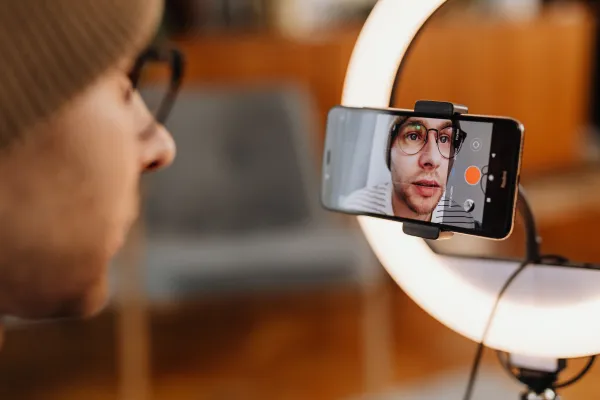
Phone video with good lighting works fine. Professional video is better but not required.
People want to see your product move and work.
The Bottom Line
Talking about your product online isn't about sounding professional or clever.
It's about making people understand:
What problem you solve
How you solve it better
Why they should trust you
What to do next
Use simple language. Show benefits. Prove it works. Make buying easy.
Your product is only as good as your ability to communicate its value.
Practice explaining it. Get feedback. Refine your message.
When you nail the communication, sales get easier.


